
Whatever Happened to the Car-Derived Van? And Could It Make a Comeback?
Whatever Happened to the Car-Derived Van?
There was a time when the car-derived van was a familiar sight on UK roads.
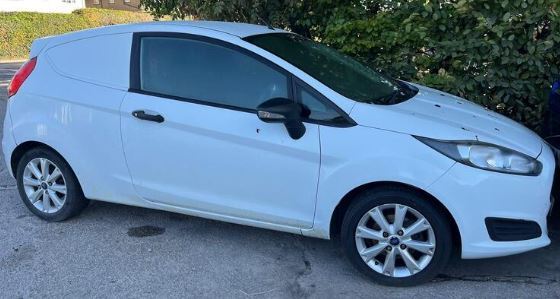
Ford Fiesta Vans, Vauxhall Corsavans and Renault Clio Vans gave businesses a simple proposition: take a small passenger car, remove the rear seats, create a load area and turn it into a compact commercial vehicle.
They were cheap to run, easy to park and, for drivers carrying little more than tools, samples or small parts, often all the van a business actually needed.
Today, they have virtually disappeared.
So, what happened to the car-derived van – and could there still be a place for one in the modern fleet?
What exactly is a car-derived van?
The term has a specific meaning in UK legislation.
A car-derived van is a goods vehicle constructed or adapted from a passenger vehicle and with a maximum laden weight not exceeding two tonnes.
Typically, it looks much like the passenger car on which it is based, but the rear seats and seatbelt mountings have been removed and the rear section converted into a load area.
Historically, examples included vehicles such as the:
- Ford Fiesta Van
- Vauxhall Corsavan
- Renault Clio Van
For businesses with light-duty requirements, these vehicles occupied a useful position between a company car and a conventional van.
Why did they make so much sense?
For the right fleet application, car-derived vans had several advantages.
They were usually economical, inexpensive to lease or buy and based on mainstream passenger cars with readily available parts and servicing.
They were also compact.
For engineers, meter readers, mobile technicians, merchandisers and other employees carrying relatively small amounts of equipment, there was often little justification for operating a larger van.
There was another advantage that is sometimes overlooked.
A correctly registered car-derived van is subject to the same national speed limits as a car. Most conventional light commercial vehicles are limited to 50mph on single carriageways and 60mph on dual carriageways, whereas qualifying car-derived vans can travel at the normal car limits.
That remains the case today.
So why did manufacturers stop making them?
There wasn't one single event that killed the car-derived van. Instead, several market trends gradually undermined the business case.
The cars they were based on disappeared
Perhaps the biggest factor was the decline of the three-door supermini.
Vehicles such as the Fiesta, Corsa and Clio once provided manufacturers with an easy starting point for a commercial derivative.
As consumer demand shifted towards five-door cars, SUVs and crossovers, manufacturers progressively removed three-door models from their ranges.
Eventually, some of the underlying cars disappeared altogether.
Once the passenger-car production volumes had gone, producing a tiny commercial derivative became increasingly difficult to justify.
Small vans became much better
At the same time, purpose-built small vans improved considerably.
Vehicles such as the Ford Transit Courier and other compact LCVs offer substantially more usable cargo space than the old supermini-derived vans without being dramatically larger.
For a fleet manager, the calculation became fairly straightforward.
If a purpose-built van provided considerably greater carrying capacity for a relatively small increase in cost, why choose the smaller vehicle?
The market therefore migrated towards dedicated LCV platforms.
Complexity increased
Modern vehicles are also considerably more complicated than the superminis from which the original car-derived vans emerged.
Emissions legislation, crash requirements, driver-assistance systems, connectivity and increasingly sophisticated vehicle electronics all add development and homologation costs.
For a vehicle that might sell only in small numbers, producing a separate commercial derivative becomes increasingly difficult to justify.
Manufacturers naturally focus investment on vehicles with greater global sales potential.
But did fleets really stop needing them?
This is perhaps the more interesting question.
The vehicles disappeared.
The use case arguably didn't.
There are still thousands of employees operating company vans who carry relatively little equipment.
Think about:
- service engineers
- telecommunications technicians
- utility workers
- meter readers
- mobile IT technicians
- property maintenance employees
- pharmaceutical and medical equipment representatives
- parts delivery drivers
In many cases, the operational requirement might amount to little more than a toolbox, laptop, PPE and a few replacement components.
Yet these drivers may now be operating vehicles considerably larger than the old Fiesta Van or Corsavan.
And that raises a broader fleet question.
Have some fleets gradually become over-vanned?
The hidden cost of running a larger van
Vehicle choice is often driven by operational teams understandably wanting sufficient capacity for every eventuality.
But specifying significantly more vehicle than a driver normally needs carries a cost.
A larger van can mean:
- higher leasing or acquisition costs
- increased fuel or electricity consumption
- more expensive tyres
- greater maintenance costs
- reduced manoeuvrability
- greater parking difficulties
- increased vehicle weight
- potentially higher whole-life carbon emissions
Multiply those differences across several hundred vehicles and apparently small specification decisions can become significant.
This is why vehicle right-sizing should form an important part of any fleet review.
The objective isn't simply to make vehicles smaller.
It is to match the vehicle as closely as possible to the job it actually performs.
Could electric vehicles bring the idea back?
Ironically, electrification could eventually create a new argument for something resembling the car-derived van.
One of the biggest challenges with electric commercial vehicles is efficiency.
Moving a large, heavy van requires a substantial battery, and that battery itself adds weight and cost.
If a driver only needs to transport 100kg of equipment, using a large electric van weighing well over two tonnes may not be the most efficient answer.
A compact electric two-seat commercial vehicle based on a passenger-car platform could potentially offer:
- lower energy consumption
- a smaller battery
- lower acquisition cost
- easier urban operation
- reduced tyre consumption
- sufficient range for typical service routes
- enough cargo capacity for genuinely light-duty applications
In other words, many of the arguments that originally supported the Fiesta Van may become relevant again.
Tax treatment still matters
Car-derived vans have not disappeared from UK legislation simply because manufacturers largely stopped building them.
HMRC guidance recognises that vehicles which clearly function as vans rather than passenger cars can be treated as vans for VAT purposes where the appropriate conditions are satisfied.
For company vehicle taxation, however, businesses should always establish the precise classification of the individual vehicle rather than assuming that something which looks like a van will necessarily receive van treatment.
Vehicle classification can have significant consequences for VAT, employee benefit taxation and operating rules.
Perhaps the bigger lesson is about fleet specification
Whether or not the traditional car-derived van ever returns, its disappearance highlights an important principle.
Fleet vehicles should be selected around operational requirements rather than simply replacing one vehicle category with another.
Before replacing a van, businesses should understand:
- what the driver actually carries
- maximum rather than average payload requirements
- daily mileage
- route profile
- number of passengers required
- towing requirements
- vehicle utilisation
- parking environment
- charging opportunities where EVs are being considered
Once that information is understood, fleets can challenge whether every driver genuinely needs the vehicle currently allocated to them.
For some employees, the answer may be a medium van.
For others, a compact van.
And in some cases, what the market arguably needs is the modern equivalent of the Fiesta Van.
Whatever happened to the car-derived van?
It wasn't legislated out of existence.
It was squeezed out by changing passenger-car design, improving purpose-built vans and the economics of developing increasingly niche vehicle derivatives.
But the operational requirement it once served hasn't necessarily disappeared.
As fleets focus more heavily on electrification, cost reduction and carbon efficiency, vehicle right-sizing is becoming increasingly important.
Perhaps rather than asking why the car-derived van disappeared, manufacturers should be asking whether it is time to reinvent it.
Let’s Talk Fleet helps organisations review fleet policy, vehicle utilisation, whole-life costs and fleet strategy to ensure vehicles are matched to genuine operational requirements. If you are reviewing your fleet or transitioning to electric vehicles, speak to our team about identifying opportunities to reduce cost and improve efficiency.