
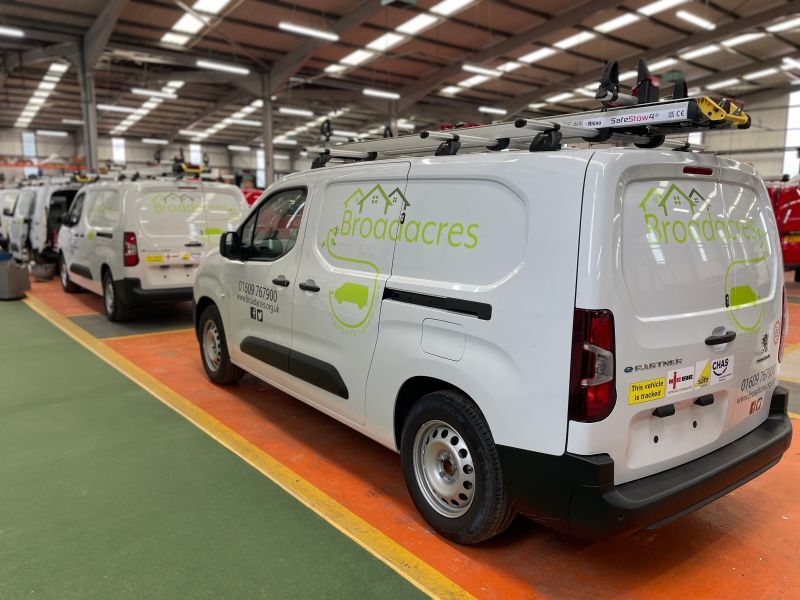
Government Considers Cutting ZEV Mandate 2030 Targets: What Does It Mean for UK Fleets?
Is the UK Government About to Relax the ZEV Mandate? What Fleet Operators Need to Know
The UK Government has launched a major review of its Zero Emission Vehicle (ZEV) Mandate, acknowledging that electric vehicle uptake is falling behind expectations and that existing targets could be unrealistic, particularly for commercial vehicles.
For businesses operating fleets of company cars and vans, the consultation could have significant implications for vehicle replacement strategies, leasing costs and fleet electrification plans.
While the Government remains committed to ending sales of new purely petrol and diesel cars in 2030, it is considering substantial reductions to the proportion of new vehicles manufacturers must sell as zero emission by the end of the decade.
So, what is changing, why is the Government reconsidering its approach, and what does it mean for UK fleet operators?
What Is the ZEV Mandate?
Introduced in January 2024, the ZEV Mandate requires vehicle manufacturers to ensure that an increasing percentage of their new car and van registrations are zero emission.
The original targets were ambitious:
- Cars: 22% in 2024, rising to 80% by 2030.
- Vans: 10% in 2024, rising to 70% by 2030.
- 2035: The Government's long-term ambition is for all new cars and vans to be zero emission.
Manufacturers that fail to meet their targets must use compliance mechanisms, such as purchasing credits from other manufacturers or using permitted regulatory flexibilities, or face financial penalties.
The intention was to accelerate electric vehicle adoption, encourage investment in charging infrastructure and provide the automotive industry with a clear pathway towards electrification.
However, the Government's August 2026 review acknowledges that the transition is proving more challenging than originally anticipated.
EV Sales Are Growing, But Not Quickly Enough
One of the most significant findings is the gap between actual EV registrations and the Government's targets.
According to the Department for Transport, electric cars accounted for 23.3% of new registrations in 2025, while electric vans represented just 9.7%.
Although both figures represent improvements on previous years, they remain below the original headline mandate targets.
The challenge becomes considerably greater as 2030 approaches.
The Government estimates that electric car sales would need to increase by approximately 31% annually between 2025 and 2030 to meet the existing targets without compliance flexibilities.
For electric vans, that figure rises to an extraordinary 52% annual growth.
To put that into perspective, electric van sales increased by an average of approximately 18% annually between 2022 and 2025.
The Government now openly acknowledges that the current trajectory may be increasingly difficult to achieve, particularly in the commercial vehicle market.
Could the 2030 EV Sales Targets Be Reduced?
The consultation presents several alternative scenarios for the ZEV Mandate.
| Scenario | Car Target 2030 | Van Target 2030 |
|---|---|---|
| Existing mandate | 80% | 70% |
| Option 1 | 70% | 60% |
| Option 2 | 60% | 50% |
| Option 3 | 50% | 40% |
| Option 4 | 80% | 70%, with extended compliance flexibilities |
The most substantial proposal would reduce the 2030 target for electric cars from 80% to 50%, and for electric vans from 70% to 40%.
Alternatively, the Government could retain the existing headline targets while allowing manufacturers greater flexibility to comply without selling the full required percentage of electric vehicles.
Importantly, these are consultation proposals, not confirmed changes to legislation.
The Government is seeking feedback from manufacturers, businesses and industry organisations before deciding whether to amend the regulations.
Why Is the Government Considering Relaxing the Rules?
The review identifies several challenges facing the automotive sector.
These include weaker-than-expected consumer demand, higher manufacturing costs, changing international regulations and uncertainty around the future competitiveness of UK vehicle manufacturing.
However, one particularly revealing finding concerns the cost of achieving the mandate.
The Department for Transport estimates that manufacturers offered an additional average discount of approximately £2,800 per electric vehicle in 2025, compared with equivalent petrol and diesel vehicles.
It also estimates that the average cost of purchasing a traded ZEV compliance allowance for cars was around £4,000 in 2024.
These figures help explain why electric vehicle lease offers can sometimes appear disproportionately competitive against their petrol or diesel equivalents.
Manufacturers have a commercial incentive to increase EV registrations, even when that requires substantial financial support.
For fleet operators, this raises an interesting question: what happens to electric vehicle pricing if manufacturers no longer face the same pressure to meet rapidly increasing sales targets?
Could Relaxing the Mandate Make Electric Vehicle Leasing More Expensive?
Potentially, although the outcome is far from certain.
The current mandate encourages manufacturers to stimulate electric vehicle demand through pricing incentives, finance support and discounted fleet deals.
If the required sales percentages are reduced, manufacturers may feel less pressure to offer aggressive discounts.
That could eventually influence leasing rates, particularly where current offers depend heavily on manufacturer support.
However, there are counteracting factors.
Battery costs continue to fall, competition between manufacturers is increasing, and more affordable electric models are entering the UK market.
The Government's review notes that the price premium for new electric cars compared with equivalent combustion-engine vehicles has already reduced substantially.
Ultimately, electric vehicle lease pricing will continue to reflect several factors, including manufacturer discounts, financing costs, residual values and market competition.
For fleet operators, the key lesson is that attractive EV lease rates should be assessed alongside the total cost of ownership rather than in isolation.
Electric Vans: The Biggest Challenge for Fleet Operators
Perhaps the most important aspect of the review for commercial fleets is the Government's recognition that electric van adoption is proving particularly difficult.
While electric cars are becoming increasingly competitive across many applications, commercial vehicles present additional operational challenges.
These can include:
- Payload limitations and the impact of additional battery weight.
- Reduced driving range when carrying heavy loads.
- Limited access to overnight charging for drivers taking vehicles home.
- Challenges installing charging infrastructure at operational sites.
- Higher acquisition costs for certain vehicle types.
- Difficulties accommodating longer or unpredictable working patterns.
For businesses operating service, maintenance, delivery or specialist vehicle fleets, these challenges can make electrification considerably more complex than simply replacing a diesel van with an electric equivalent.
An electric van may offer compelling whole-life cost savings for a predictable urban delivery operation.
The same vehicle might be unsuitable for an engineer covering large rural territories, carrying substantial equipment and responding to emergency call-outs.
The consultation's proposed reduction of the 2030 electric van target to as low as 40% suggests that policymakers are increasingly recognising these operational differences.
That does not mean businesses should abandon electric van adoption.
Instead, it reinforces the importance of identifying which vehicles are suitable for electrification today and developing a realistic transition plan for the remainder.
Plug-in Hybrids Also Face Closer Scrutiny
Another significant aspect of the consultation concerns plug-in hybrid electric vehicles (PHEVs).
PHEVs have become increasingly popular, offering businesses the ability to undertake shorter journeys electrically while retaining a combustion engine for longer trips.
However, the Government highlights a substantial difference between official emissions figures and real-world performance.
According to the review, actual PHEV CO₂ emissions can be between three and seven times higher than their existing official WLTP figures.
Much of this difference arises because official testing assumptions overestimate how frequently vehicles are driven electrically.
A PHEV that is regularly charged and used predominantly for shorter journeys can deliver meaningful emissions savings.
However, a vehicle that is rarely plugged in may operate primarily as a petrol or diesel car while carrying the additional weight of an electric battery.
For fleet managers, this highlights the importance of monitoring actual charging behaviour and vehicle utilisation.
Selecting a PHEV purely on its published CO₂ emissions or Benefit-in-Kind tax treatment may not deliver the expected environmental benefits.
The Government is examining whether current manufacturer compliance arrangements create excessive incentives to sell PHEVs rather than fully electric vehicles.
Is the 2030 Petrol and Diesel Ban Being Delayed?
No. At least, that is not what the consultation proposes.
The Government explicitly reaffirms its commitment to ending the sale of new cars relying solely on petrol or diesel engines from 2030.
However, there is an important distinction between conventional combustion-engine vehicles and hybrids.
Under the Government's stated approach, qualifying full hybrids and plug-in hybrids can continue to be sold between 2030 and 2035.
Mild hybrids, which cannot provide sustained electric-only propulsion, are not intended to qualify.
The consultation also examines how to define eligible hybrid technology consistently.
The longer-term commitment remains that all new cars and vans should be fully zero emission by 2035.
For fleet operators, this means conventional petrol and diesel cars remain available in the existing market before the 2030 phase-out, while qualifying hybrid technologies could offer an additional transition option thereafter.
What Should Fleet Managers Do Now?
The consultation introduces greater uncertainty around the precise pace of electrification, but it does not change the fundamental direction of UK transport policy.
Businesses should therefore avoid making fleet investment decisions based solely on the possibility of relaxed targets.
At Let's Talk Fleet, we believe the most effective approach is to develop an evidence-based fleet transition strategy.
1. Identify vehicles suitable for electrification now
Analyse annual mileage, daily journey patterns, vehicle utilisation, payload requirements and charging access to establish which vehicles can be replaced with electric alternatives without compromising operations.
2. Compare whole-life costs
Consider lease rentals, energy costs, maintenance, taxation, insurance, charging infrastructure and expected operational savings.
A higher monthly rental does not necessarily mean a higher overall fleet cost.
3. Review vehicle replacement cycles
For vehicles that are not yet practical to electrify, consider whether replacement timing should be adjusted to reflect future improvements in vehicle technology and infrastructure.
4. Assess actual PHEV performance
Where plug-in hybrids are used, monitor charging behaviour and real-world energy consumption to understand whether the expected emissions reductions are being achieved.
5. Maintain a flexible fleet transition plan
Avoid committing to arbitrary electrification percentages without understanding whether suitable vehicles and infrastructure will be available.
A realistic transition plan should balance environmental objectives with affordability, operational requirements and business continuity.
The Bigger Picture: A More Pragmatic Approach to Fleet Electrification?
The ZEV Mandate review represents an important acknowledgement that the transition to electric vehicles may not follow the smooth adoption curve originally anticipated.
Electric vehicle registrations continue to grow, manufacturers are introducing increasingly competitive products, and charging infrastructure is expanding.
However, the Government is now considering whether the pace demanded by regulation has moved ahead of consumer demand and commercial practicality.
This is particularly relevant to van fleets, where operational suitability can be a greater barrier than simply the upfront cost of the vehicle.
For businesses, the message is clear.
Fleet electrification remains the direction of travel, but the journey needs to be commercially sustainable and operationally practical.
The strongest fleet strategies will be those based on detailed vehicle data, realistic whole-life cost modelling and a clear understanding of when electrification delivers genuine benefits.
How Let's Talk Fleet Can Help
At LetsTalk Fleet, we help businesses develop practical, cost-effective fleet strategies that balance financial performance, operational efficiency and environmental objectives.
Our fleet consultancy services can support businesses with:
- Fleet electrification feasibility assessments.
- Electric vehicle and diesel whole-life cost comparisons.
- Vehicle replacement and procurement strategies.
- Fleet emissions analysis and reduction planning.
- Charging infrastructure and operational suitability assessments.
- Fleet policy reviews and long-term transition planning.
Whether your business is beginning its electrification journey or reviewing an existing strategy, our independent advice can help ensure that every decision makes commercial and operational sense.
Visit LetsTalk Fleet to discuss your fleet transition strategy.
Source: Department for Transport, Zero Emission Vehicle Mandate Review, August 2026. The consultation closes on 23 October 2026. All proposed changes remain subject to consultation and subsequent government decisions.